


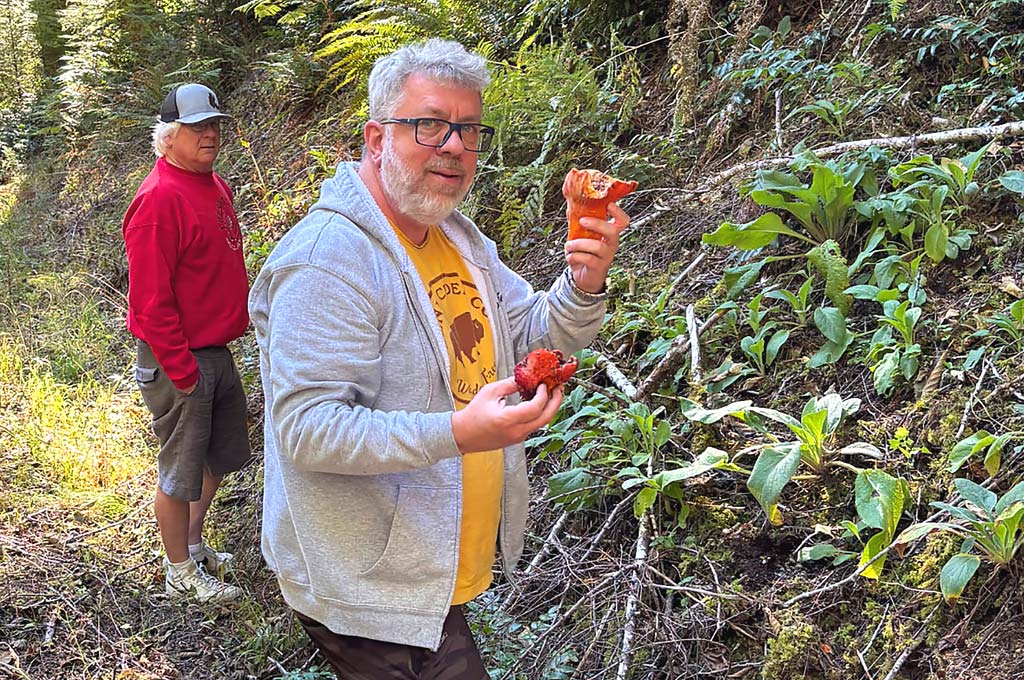
“A lot of people are interested and curious about what we do,” said avid mushroom hunter Kevin Smith. “I don’t know what it is about fungus; it’s just kind of a bug you get. It is a fascination that I can’t really explain.”
Smith moved to Tigard from Tennessee in 2008 and said he became fascinated with foraging in Oregon’s mountain ranges after visiting Bagby with his kids and a Tigard local he’d met.
“We took my kids up to Bagby, and there were chanterelles everywhere,” Smith said. “So he (his friend) grabs a trash bag and starts grabbing all these chanterelles, and I think he’s nuts. Who’s this crazy guy? You’re gonna eat that?”
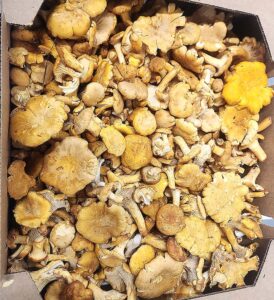
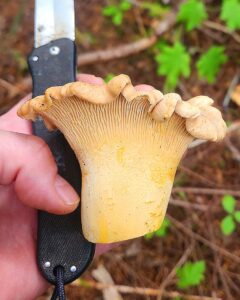
Chanterelles are one of the easier-to-find members of the mushroom family in Oregon, and they’re yellowy orange and edible. Between July and November, chanterelle mushrooms are abundant in Oregon’s forests, and Smith suggested first-time foragers flock to the Coastal Range, monitor Mount Hood or search along the Clackamas River.
“It took us years,” Smith said. “We finally found a good, reliable spot, and it was like the sun came out and the angels were singing like, ‘Ahh.’ We saw them at Bagby, and they were sticking up; they were visible, they were like these golden, they were just there. We didn’t realize that’s not normally the way it is.”
Smith said first-timers should look out for slight “shades of orange” in old forest “duff” (a thick layer of pine needles) and expect to search underneath moss and around trees.
Another local mushroom hunter from Tigard, Jeff Michels, said hunters could check for chanterelles around Hemlock trees and salal bushes.
“Know your companion plants,” Michels said. “If you’re driving down a dirt road, you can tell whether there’s gonna be mushrooms in there by looking at the trees and the plants on the ground.”
Michels’ interest in the activity eventually morphed into a career when he started his sustainable food company, Cascade Organic, in 2005.
“The Pacific Northwest supplies most of the country with wild forage products,” Michels said. “When I moved to Oregon, I was shocked when I walked in the woods out here because the first thing I noticed was that everything is edible and it’s in a massive abundance.”
Michels moved to Oregon in 1999 and quickly discovered unique opportunities in foraging. Cascade Organic, which supplies restaurants with freshly foraged produce, was inspired by successful mushrooming trips Michels took with his daughters, during which they sold their excess bounty to local chefs in Portland after returning to town.
“I’d drive the girls downtown and have them sell their mushrooms to different chefs,” Michels said. “That was really how it all started.”
These days, for his business, Michels mainly gets fungi through what he called “mushroom camps,” which are large-scale gatherings of pickers who scour the duff hidden deep in the forests of the Cascade Mountain Range.
“There are mushroom camps set up in the forest by the Forest Service where the mushroom pickers will live during the season,” Michels said. “Then there’re people like me who are buyers, and it’s sort of like an old-school western rendezvous. They go out picking mushrooms, and then they try to get the best prices from buyers like me, lots of bartering going on.”
Michels said he still routinely travels to mushroom hotspots and forages for fun with his daughters, telling Tigard Life that he has definitely seen a recent boom in the pastime’s popularity.
“When I started my business I was the one picking all the mushrooms for it,” Michels said. “I used to go out there, and I’d never see someone, and now it’s very rare that you go out and don’t see someone.”
Both Michels and Smith agreed that Oregon’s large variety of edible mushrooms boasts unique flavors and health benefits. Smith emphasized that fall was the time to look for chanterelles, lobsters and lion’s mane.
“Chanterelles, the texture is more like shredded chicken,” Smith said. “And lobsters are very meaty, very much like seafood and lion’s mane- that’s my favorite; you can make the most absolute best crab cakes out of lion’s mane.”
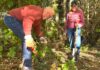
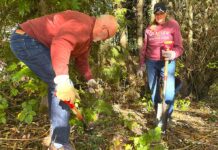
Michels and Smith had split opinions on how folks should physically get mushrooms out of the ground. Smith suggested foragers pluck fungus off the mycelium, the larger system of spores that sprout mushrooms out of the dirt, while Michels argued foragers should use a knife.
Within the mushrooming community, pulling mushrooms out of the ground and cutting them at the stem both have incredibly vocal advocates, and the topic is far and away the fiercest debate raging among foragers. And while the debate grows increasingly complicated the further one delves down the rabbit hole, experts typically suggest that both methods are fine for foraging edible mushrooms as a beginner.
Michels, who said he was interested in teaching classes on the subject some day, said the most important thing for beginners to be aware of is their location.
“You get mushroom fever, and you lose focus,” Michels said. “Understand that your phone may not work when you’re out there. And so if you have a GPS-type thing, make sure that it works where there’s no cell phone.”
Foraging Safety & Local Resources
While foraging is a rewarding hobby, it carries severe risks for the unprepared. Oregon’s forests are home to highly toxic species—such as the deadly Death Cap and Destroying Angel—which can easily be mistaken for edible varieties by an untrained eye. Ingesting the wrong mushroom can lead to severe illness, organ failure, or death. The absolute rule of foraging is: never consume a wild mushroom unless you are 100% certain of its identification. If there is any doubt, throw it out.
Physical safety in the woods is equally critical. Foragers frequently wander off established trails while scanning the forest floor, making it incredibly easy to become disoriented. Because cellular service is virtually non-existent in the Coast Range and Cascades, always carry a physical map, download offline GPS data, pack standard survival gear, and inform someone of your exact destination and expected return time.
The safest way to start is by learning directly from seasoned experts. Beginners should avoid relying solely on automated identification apps and instead connect with a local community. The Oregon Mycological Society (OMS), based in the Portland metro area, is the premier regional resource. They host educational field trips, comprehensive identification classes, and seasonal mushroom shows designed to help newcomers learn the hobby safely and responsibly. Information on memberships and upcoming events can be found at wildmushrooms.org.