





Libra Forde remembers growing up during high school, excelling in both the classroom and in sports, but not wanting anyone to know what was going on at home.
There, her mother was bipolar, and Forde’s life at home was often traumatizing, she said.
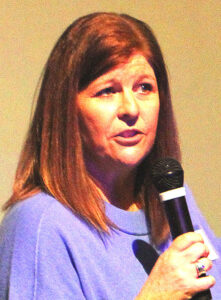
“I never told a soul,” Forde said. “There were nights we didn’t have food, and there were weeks my mother wouldn’t talk to me. I got all A’s because I didn’t want my mom to have to come to school.”
In a graduation speech, Forde decided to talk about those experiences, and she said her counselor and teachers at school were shocked, as were many others who had previously only seen her success and achievements. She said that until then, she had let a desire for perfection outweigh her bravery.
“That’s what perfection does,” she said. “Bravery is doing it in spite of pain and pressure.”
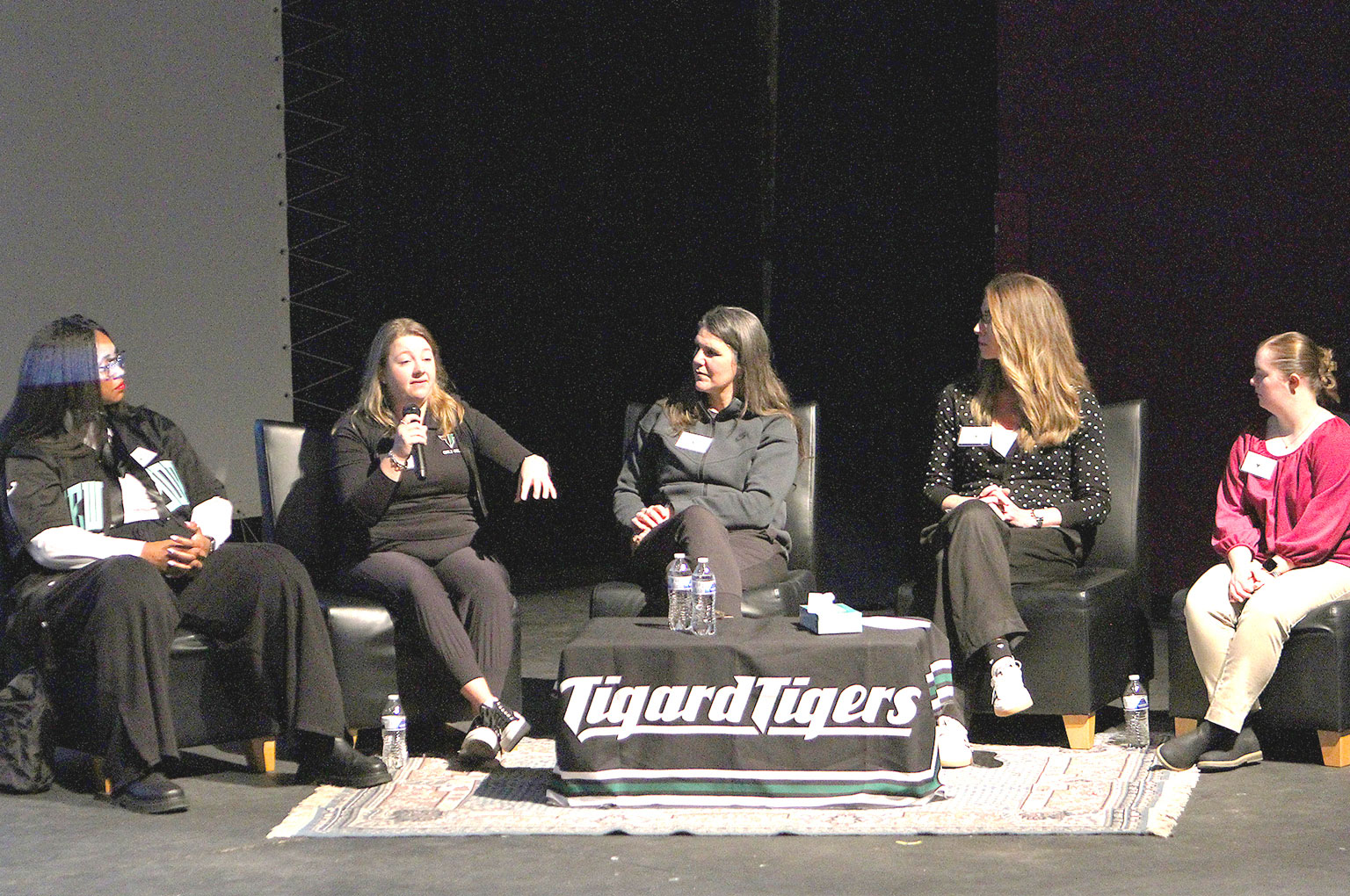
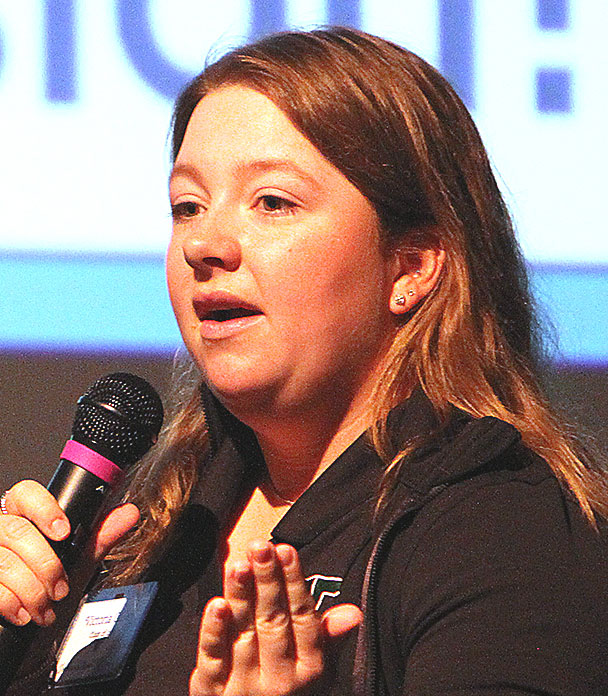
Forde, who is now the executive director of the Women’s Foundation of Oregon, shared her story with more than 150 high school athletes on Feb. 6 at Tigard High School’s third annual Women in Sports Symposium, which was put on in conjunction with National Girls & Women in Sports Day.
“Be brave more than perfect,” Forde said. “That’s the key to life. No matter your choices in life, choose bravery.”
After her speech, she said her community showed up for both her and her mother.
Forde grew up in Harlem, New York, and played basketball professionally overseas before shifting her focus to work in the corporate world, specifically in racial and social justice, and in education.
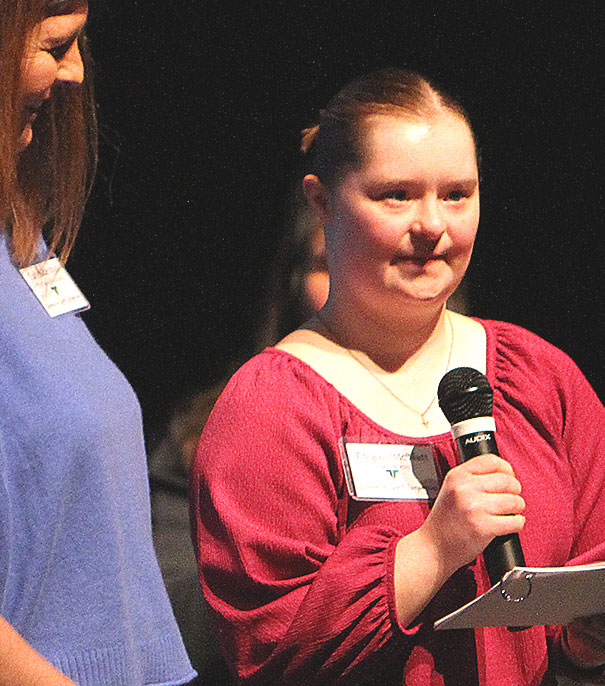
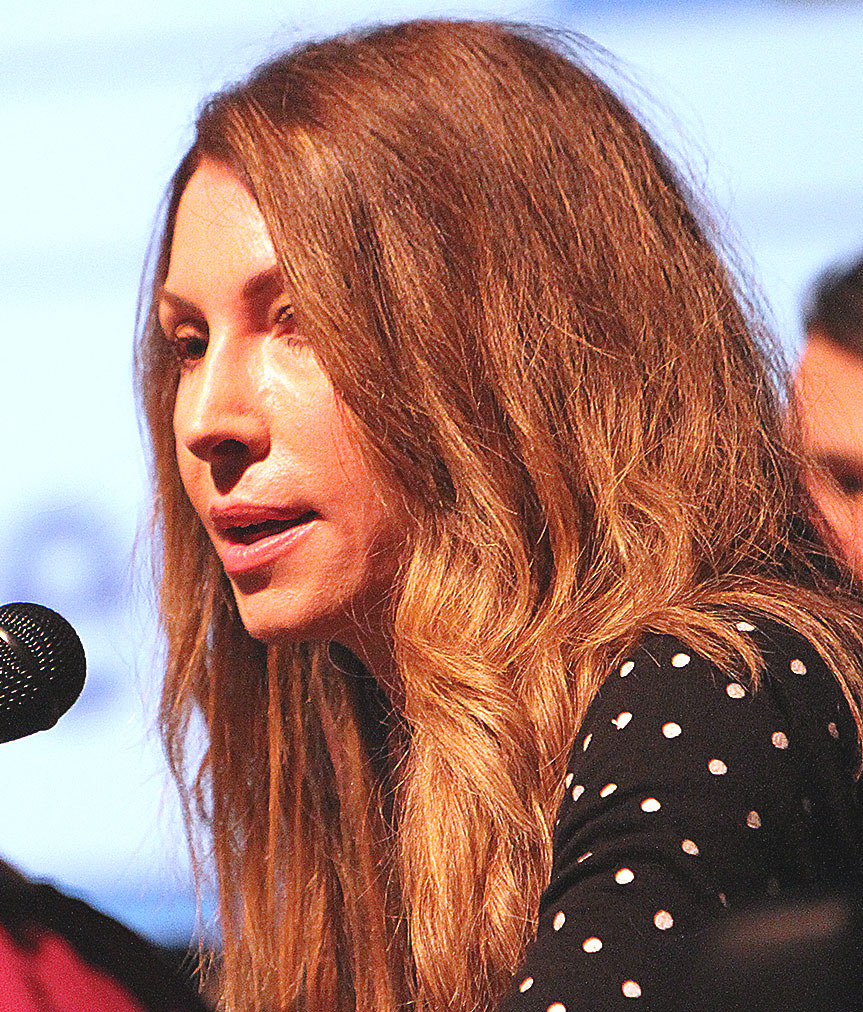
The panel was emceed by Tori Alderman, a counselor at Tigard and the athletic equity coordinator. The other panelists were Tigard High School grads: Laurie (Milligan) Vizzini, class of 1994; Shannon (Sorg) Strode, class of 1999; Victoria Gailey, class of 2018; and Abigail McNatt, class of 2023.
The theme of this year’s event was Rising up Through Adversity. All of the women on the panel spoke about various kinds of adversity they’ve battled, and how their years as athletes helped them work through those problems.
Strode played soccer, basketball and softball, earning 12 varsity letters, and she played softball at Oregon State University. While at Tigard, Alderman was her softball coach, and said Strode worked harder than just about any other athlete.
“I was that annoying kid who asked the coaches to stay after practice to hit me more grounders and get up more shots when I knew they wanted to go home,” Strode said.
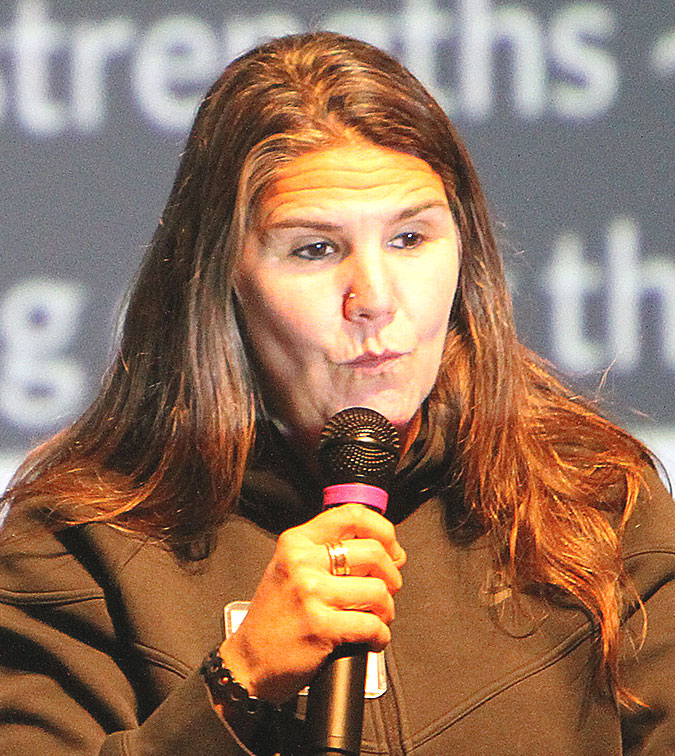
While Strode excelled at all the sports she played – Alderman said she could’ve played collegiately in multiple sports – Strode said she was plagued with self-doubt her sophomore year at Oregon State.
She said she wanted to quit and was calling home to her parents, crying, to say she was in over her head. What eventually flipped things around for Strode was falling back on her athletic training and all those late nights putting in extra work.
“That bravery I got from sports, that grit and that mental toughness will stay with you,” she said. “Sports has a way to make you stronger and braver than you thought possible.”
Those messages are the ones she now tries to impart on the kids she leads as the softball coach at Tualatin High School. Perhaps the only time in the 90-minute panel when there was even slight friction was when Strode told the crowd where she coached and threw out a “Go Wolves,” drawing a thumbs-down from a fellow panelist and a few groans from the athletes in the crowd.
The rest of the event was a celebration of women and girls in sports and how to support one another and lift each other up. That was a big theme in McNatt’s talk, who was on the cheer team while at Tigard.
McNatt spoke about how sports have been a part of her life practically since she was born. Her parents put her in swim lessons when she was just a year old, and eventually she discovered dance and cheer. When McNatt went out for the school dance team, she didn’t make the cut.
She spoke about the disappointment in that, but how she continued to dance at a studio outside of school to work on her craft, and then she eventually made the cheer team. McNatt also talked to the crowd about being an athlete with Down syndrome and how being on the cheer team helped with that.
“People with Down syndrome can do anything,” she said. “In cheer, people were counting on me and needed me to show up on time and know the routine. Cheer gave me a place to belong and a place in the community.”
Alderman praised McNatt and her mother because, when she reached out to have McNatt on the panel, McNatt said her mom and she had set up a meeting beforehand to go over what McNatt needed to do. Alderman said that’s the kind of preparation athletes train for that will carry over into wherever they go after high school, whether in sports, in the business world, or in life.
It’s also okay if those future plans don’t go as originally dreamed of, Gailey said. The golfer was selected to the First Team All-State team all four years while at Tigard, and was named the league Player of the Year each year from 2016 to 2017.
Gailey wanted to golf at the University of Oregon, but wasn’t offered a spot on the team, so she ended up at the University of Nevada, Reno, which she said ended up being a great decision. She loved it there and in her final season, was named to the All-Mountain West First Team for the first time in her career.
She is now in her third year as a professional golfer. Gailey said her ultimate goal is to make the LPGA Tour, but to get there, she has to play in smaller tours and keep qualifying for higher events. Last year, she missed qualifying for the next step up on her journey by one stroke.
However, she ended up going to an event in Morocco after that and said it was one of the coolest experiences of her life.
“Disappointment led me there,” she said. “When things don’t go as you planned, that can be challenging. If you just keep doing the right thing, it can turn out even better than your original plan.”
That’s another thing a few of the panelists hit on: success isn’t a straight line. You can plan and prepare and dream, but sometimes you have to roll with the punches, both positive and negative.
When Vizzini was a star basketball player in high school and on her club team, she was getting offers to play at Division 1 schools, but didn’t know much about them. She was at a tournament in Texas when she received a letter from an assistant coach at the University of Tennessee, informing her that women’s basketball coach Pat Summitt would be watching her next game.
Vizzini didn’t know who Summit was at the time, but soon learned she was a big deal at the next game, when the gym came to a stop when a woman decked out in orange sporting a few national title rings walked into the gym.
Summit left after the first quarter, and Vizzini thought she blew it. Instead, she got a letter after the game from Summit saying she saw all she needed to in warmups, and she wanted Vizzini at Tennessee.
Vizzini attended Tennessee and spent four years learning from one of the most legendary coaches in the history of the sport. She became the first man or woman in NCAA history to play in four straight national title games.
Earlier this year, Vizzini was elected to the Oregon Sports Hall of Fame. She talked to the students about the ability to process what happened, learn from it and move on. That’s something Summit told her and her teammates after they lost a national title game to UConn.
“She told us, ‘Feel the weight of this loss. Feel the weight of it. The next day, let’s get back to work,’” Vizzini said. “The next year, we came back and won the national championship. After that game, she said, ‘Feel the weight of this win. Enjoy it and celebrate it, and then let’s get back to work.’ That’s what sports can teach you to do.”
After all the women spoke, students had a chance to ask the panelists questions. They asked about balancing sports and athletics, how gender and racial inequality have shaped them as people, and how to avoid getting too caught up in comparing yourselves to others.
The panelists also talked to the boys who attended the event, letting them know how important it is to show up for the girls, to cheer for them, and not to let anyone think they’re lesser or can’t compete.
“This isn’t a feminine thing,” Alderman said. “This isn’t about women and girls. It’s about all of us together. We are better when we all lift each other up.”