





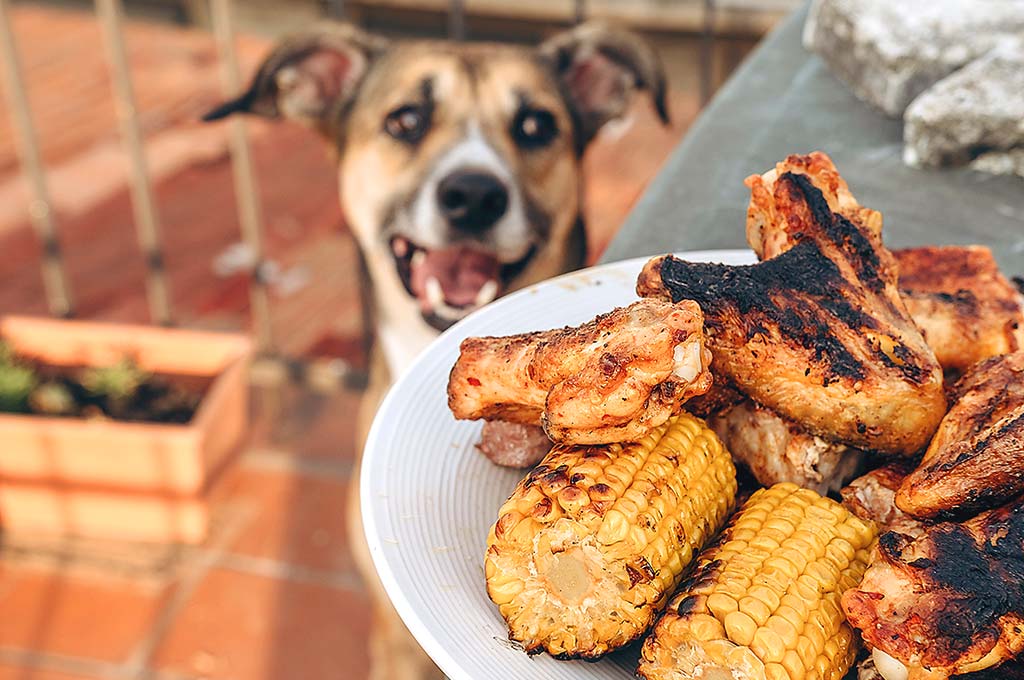
Summer in Tigard and across Oregon means backyard gatherings and food on the grill. Pets have guests to greet, dropped food to find, and plates left at the right height. Unfortunately, some cookout foods and supplies can turn a fun afternoon into an emergency visit.
Fatty Foods Can Cause Big Problems
One of the biggest risks at a barbecue is rich, fatty food. Ribs, sausage, hot dogs, burger grease, and fatty scraps can all upset a pet’s stomach. In some dogs, these foods can trigger pancreatitis, which is inflammation of the pancreas. Pancreatitis can cause vomiting, diarrhea, belly pain, loss of appetite, and dehydration. Some cases require hospitalization.
Even if your pet has handled table scraps before, barbecue foods often contain more fat, seasoning, and volume than they are used to. Plain cooked meat may be okay for some pets, but greasy, smoked, or seasoned foods are best avoided.
Bones, Skewers, and Corn Cobs
Cooked bones can splinter and injure the mouth, throat, stomach, or intestines. They can also cause an obstruction.
Skewers and kebab sticks are especially concerning. A dog may swallow the stick along with the meat, and these sharp objects can puncture the digestive tract. Corn cobs are another summer emergency. They are not digestible and can lodge in the intestines, sometimes requiring surgery.
Do Not Forget the Grill Brush
One hazard many owners do not think about is the wire bristle grill brush. Small metal bristles can break off during cleaning and stick to the grill grates. From there, they can lodge in food and be swallowed. These bristles can become embedded in the mouth, throat, stomach, or intestines and may be difficult to find. A colleague of mine has seen this happen in a dog, and it caused serious problems.
To reduce this risk, inspect your grill before cooking, wipe the grates after brushing, and consider a bristle free cleaner.
Watch the Ingredients
Many barbecue foods contain ingredients that are unsafe for pets. Onions, garlic, chives, and marinades can be toxic. Sugar free items may contain xylitol, which is dangerous for dogs. Alcohol, cannabis products, chocolate desserts, grapes, and raisins should stay out of reach.
Guests Need Guidance Too
Most guests mean well, but not everyone knows what pets can eat. A simple reminder not to feed the dog or cat from the table can prevent problems. A quiet room, crate, baby gate, or leash can keep pets away from the grill, trash, and serving tables.
Trash Is a Temptation
After a barbecue, the trash may contain bones, skewers, foil, plastic wrap, grease, and scraps. Use a covered trash can and take garbage out promptly. Many emergencies happen after the party, when pets investigate what was left behind.
If your pet eats a corn cob, skewer, cooked bone, xylitol, cannabis product, or develops repeated vomiting, weakness, belly pain, or trouble breathing, contact a veterinarian right away.
With planning and clear rules for guests, you can keep your pets safe while still enjoying the season.
For more information on veterinary care and pet safety, visit www.nimbuspet.com.