






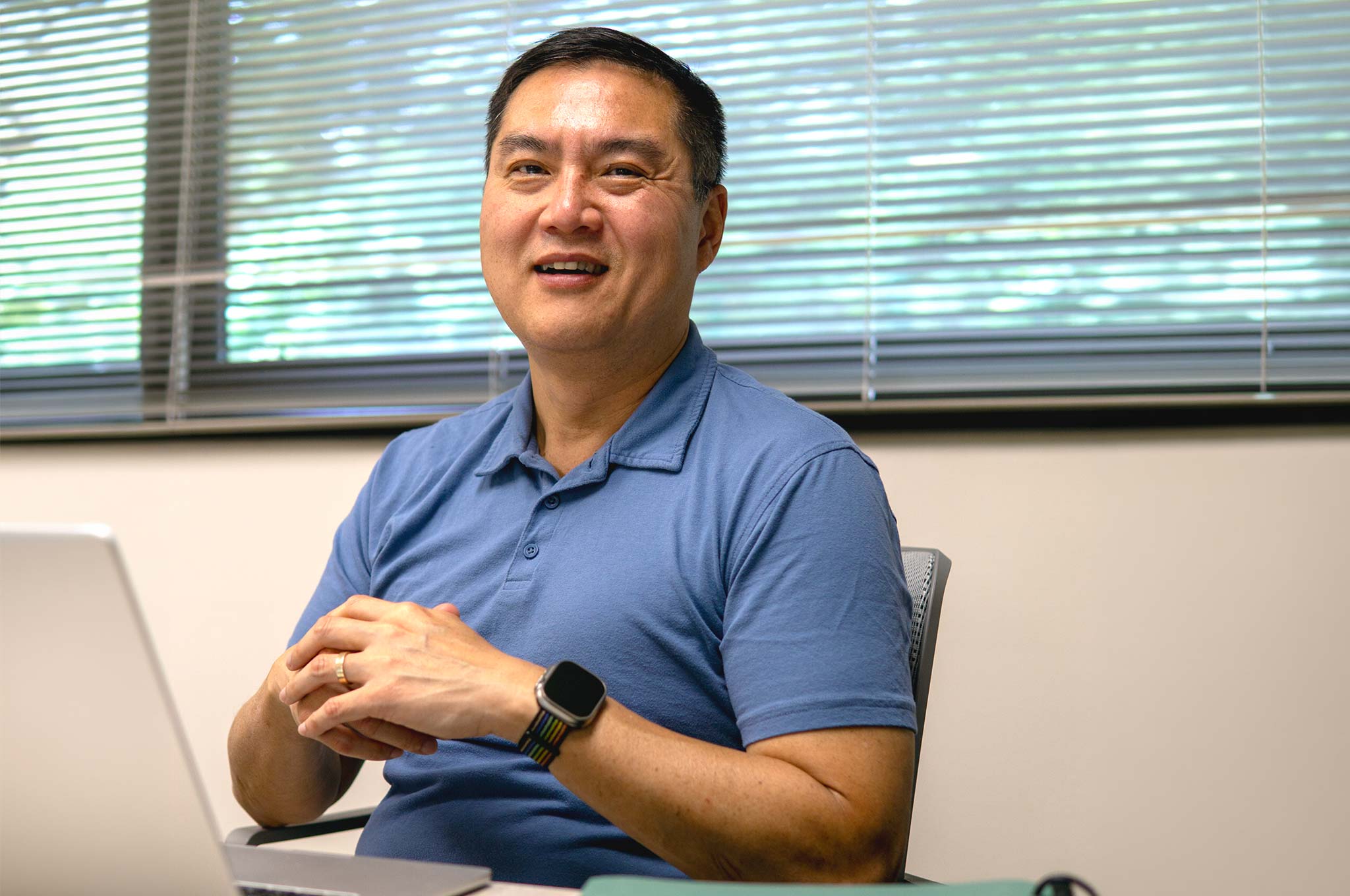
Yi-Kang Hu moved to Tigard more than 20 years ago for practical reasons: The city offered an equal commute time for his legal work in Portland and his husband’s job at Intel in Hillsboro, Hu said. Plus, Tigard offered lower home prices than Portland.
Though Hu had not known neighbors of his prior Portland homes, he soon discovered that Tigard would break that mold: “All the neighbors around our cul-de-sac within the first week, they knock on our door, bring us food, and it’s just so friendly. It was like, oh my gosh, this is so different.” A few of those neighbors would move away, Hu said, but others would become great, lasting friends.
Hu also found out that many residents he met engaged in community service and charitable projects to help neighbors and friends in need, Hu said. “They’re just so caring for one another,” he said.
Now, 20 years later, Hu said the city is bigger and home to more traffic, diversity and “big-city problems,” such as homelessness, growth and aging, cramped municipal buildings. As mayor, Hu and fellow city council members have been grappling with such complexities.
But in a wide-ranging interview with Tigard Life, the mayor of Tigard said he always keeps his fellow Tigard neighbors in mind as he leads the city. It is for them, he said, that he pushes for transparency and accountability.
The 53-year-old Hu said his first stretch as mayor – since Oct. 7, when he was appointed – has taught him that what he says now carries extra weight in guiding city government and, by extension, the community. “Even though I have an equal vote as other council members, people really pay attention to what the mayor has to say,” Hu said.
“I set the tone, and I’m viewed as a leader, so my most important priority … right now is just to make sure that the city is … being held accountable to the people,” Hu said. “We have to be transparent, we have to be responsive and we have to continue to rebuild trust.”
Towards that end, Mayor Hu’s intention has been to show up, carefully listen and bring people together to solve problems facing the community, he said. It is that resolve that Hu considers his biggest accomplishment as mayor so far.
Building a Better Tigard Bond
Nevertheless, an obvious disconnect between what the city recommended and what the public wanted became clear in the resounding May defeat of a $150 million city-backed bond levy to build a new joint campus housing the city police and public works departments.
“The one lesson we learned from the bond is that we really need to be transparent, so that means … we need to reach out to people, listen to people, get community feedback,” Hu said, “and when we work on big projects, like a bond, we need to work with the people, not ahead of the people.”
In the spring, when the mayor said he knocked on hundreds of doors to chat with residents about the levy, he found they understood the need for more modern facilities, but they had many questions about the proposed cost and approach to addressing the problem.
“First of all, why is it $150 million? Can it be cheaper? Can it be funded otherwise? Or why do we need to have two facilities combined?” Hu said.
“All those questions that I heard are something that … going forward, we really need to address seriously, to make sure that we have community buy-in and address all the questions,” the mayor said.
Hu pledged to refuse to entertain any proposals for bond funding for the police and public works facilities unless all substantial issues are addressed with the public in advance.
The process must start with understanding why the bond measure failed, he said. “I’m not moving forward until the city has a good grasp on that,” the mayor said.
A first discussion with staff about how to regroup over the facilities problem will take place at the city council meeting on July 28, Hu said. Any alternative proposal will take many additional months to solidify, he suggested.
During early talks on the prior bond plan, Hu said he had called for a citizens’ panel to advise the council on public views on the plan. “Unfortunately, I was ignored,” he said. “But now as mayor, I have more of a say in things,” he said. Hu is sure to push for a panel again, he said.
“I’m not going to support anything until we have a robust engagement process,” he said.
Moreover, the city must make clear what use will be made of existing police and public works headquarters, the mayor said. “We cannot move forward with anything unless we clearly articulate what the city planned to do with the existing facilities, because that’s one of the things that was important to voters,” Hu said.
As for how the bond figure reached $150 million, Hu said he suspects those planning the project proposal were trying to address every long-term need at once.
“Our original proposal would last 40 to 50 years,” Hu said. “(But) we may have to come back in 10 to 15 years and ask for expansion.”
Meantime, Hu said, some voters were concerned about affording enough food or balancing expenses among food, gas or medication.
“I really want to focus on …using taxpayer money wisely, because right now … Tigard residents are feeling the squeeze from the cost of living,” Hu said. “But then sometimes … the cost of providing service at a city level is also going up.”
Budget/Library Funding
On another front, Hu defended the council’s handling of a $6.5 million general fund deficit in the spring. In the most contentious move, it opted not to renew funding for a temporary social services coordinator at the Tigard Public Library.
In all budgeting, Hu said, the council committed itself to preserving the core functions or services of key city organizations while tightening costs in them and other departments to balance the budget.
In the case of the library, he said, the city is still providing the most robust library services, including the longest hours, in Washington County.
In his role, Hu said, constant trade-offs abound: How does the city treat homeless people with compassion while preserving the rest of the public’s rights? How does the city manage the development of the up to 4,000-home River Terrace 2.0 development while protecting the rest of the community’s quality of life?
In the city’s leadership profile, Hu said that although the city council is still working to hire a permanent city manager to replace Brent Stockwell, who resigned in November, the city is functioning well under acting City Manager Brian Rager, who is also public works director.
To the extent that budget, bond and other debates have stressed Hu, he credited his husband, Abram, for listening as he talked through issues. “My husband is a good sounding board,” Hu said. “He … (has) listened to more city issues than anybody should have.”
“The spouse of a politician – you have to give them lots of kudos,” Hu said.
For relaxation, Hu said he also spends time in his backyard, bicycling around Tigard, walking in Cook Park and, when he splurges, enjoying the Taiwanese cuisine of his childhood by dining at Din Tai Fung in Washington Square.
Communitywide, Hu wants Tigard to feel welcoming to everyone. As the city’s first Asian, immigrant and openly gay mayor, Hu suggested he’s glad to serve as a role model for minority communities, though he most wishes to be known primarily for his mayoral work.
At an annual State of Our City event in April at Broadway Rose Theatre, Hu was introduced by way of his minority credentials. The gesture cut both ways for him, he said.
“I want people to know me as a mayor who makes their life better and makes city government … more affordable for everybody,” he said. “But sometimes when I hear that … I can make people feel more comfortable and more welcoming and more to be themselves.
“I reach out to people who have different opinions than mine all the time because, you know, all my life, I feel like I’m being an outsider. (But) I really want to make sure I reach out to them to make sure they understand that, no, this government, the city government, is yours too. It belongs to everybody. I’ve been an outsider, so I don’t want to leave anybody behind.”
The same is true with his burgeoning mayoral campaign, which he counts as his third job after serving as mayor and working as an attorney on food and drug matters. Fortunately, he said, he likes the person-to-person contact of campaigning.
Residents are sometimes surprised when he calls or visits them to hear their thoughts, Hu said. Sure, he wants them to feel heard, he said, but as a policymaker, he also doesn’t want to carry any blind spots about community concerns.
“They are just like my neighbors, right?” he asked.